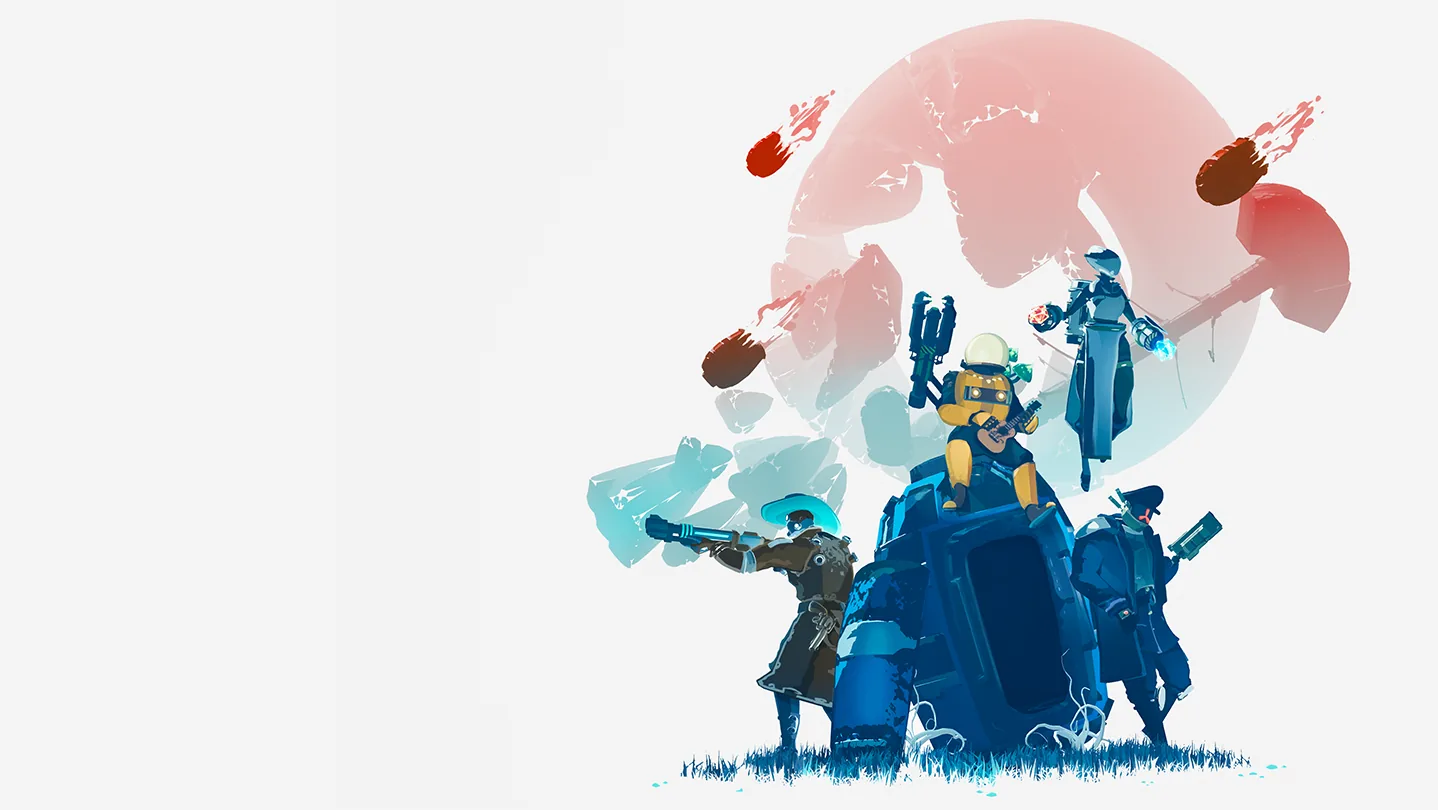
Risk of Rain 2's Hallowed Concepts roster contains 20 selectable survivors, with Heretic as an additional run-only transformation. Commando and Huntress are available from the start. Other survivors depend on challenges, expansion ownership, or both. Choose a character by the combat system you want to manage: aim, movement, positioning, health, resources, or summoned allies.
The latest expansion survivors are Enforcer and Acolyte. Enforcer starts available with Hallowed Concepts, while Acolyte requires A Broken Ritual. Older lists ending at Alloyed Collective omit those two and should not be used as the complete current selection screen.
Find a character within the content you own
| Content | Selectable survivors |
|---|---|
| Base game | Commando, Huntress, Bandit, MUL-T, Engineer, Artificer, Mercenary, REX, Loader, Acrid, Captain |
| Survivors of the Void | Railgunner, Void Fiend |
| Seekers of the Storm | Seeker, CHEF, False Son |
| Alloyed Collective | Operator, Drifter |
| Hallowed Concepts | Enforcer, Acolyte |
Heretic is separate from that selectable roster. Collecting all four Heresy Lunar items transforms your current survivor for the rest of the run. It is not a permanent unlock that adds a normal selectable portrait for future attempts.
Expansion access and challenge completion are also separate. A shared cooperative expansion can allow its content into a lobby without granting everyone selectable access to the expansion survivors. Check your own ownership and the individual locked survivor's condition.
Start with Commando or Huntress to learn the basic choice

Commando is a general-purpose character whose role is reliable across different encounters. Huntress emphasizes mobility and damage while starting with less health. Both are available without a survivor-unlock run.
That gives a useful first comparison: do you want the more general-purpose starting character, or do you prefer a mobile survivor with a smaller health margin? The answer can change as you learn the enemies and become more comfortable moving during attacks.
Starting with one of them also separates basic run knowledge from unlocking a new combat system. You can learn how to complete Teleporter events and manage movement before adding a turret inventory, a health-spending ability, or an expansion resource.
Their default availability does not mean every alternate skill is already unlocked. A new survivor, an alternate skill, and a cosmetic skin have separate conditions. Inspect the selected loadout rather than assuming that a character guide's preferred alternate is available on a fresh account.
Compare base stats without turning them into a ranking
| Survivor | Base health | Base damage | Armor |
|---|---|---|---|
| Commando | 110 | 12 | 0 |
| Huntress | 90 | 12 | 0 |
| Bandit | 110 | 12 | 0 |
| MUL-T | 200 | 11 | 12 |
| Engineer | 130 | 14 | 0 |
| Artificer | 110 | 12 | 0 |
| Mercenary | 110 | 12 | 20 |
| REX | 130 | 12 | 20 |
| Loader | 160 | 12 | 20 |
| Acrid | 160 | 15 | 20 |
| Captain | 110 | 12 | 0 |
| Railgunner | 110 | 12 | 0 |
| Void Fiend | 110 | 12 | 0 |
| Seeker | 115 | 12 | 20 |
| CHEF | 110 | 12 | 0 |
| False Son | 180 | 12 | 0 |
| Operator | 90 | 12 | 0 |
| Drifter | 170 | 12 | 20 |
| Enforcer | 130 | 12 | 30 |
| Acolyte | 130 | 12 | 0 |
These are listed base values, not measurements of complete builds. A larger health number does not automatically reproduce another survivor's shielding, healing, mobility, or damage conversion.
Most listed survivors have a base movement speed of 7 m/s, but movement abilities can make their practical traversal feel very different. Loader's grappling hook, for example, is a defining navigation tool despite that ordinary movement-speed entry.
Likewise, base damage is the starting stat used by skills. A skill's multiplier, firing pattern, and application conditions still matter. Comparing 14 base damage with 12 does not establish that every Engineer attack outperforms every attack from a survivor with the lower value.
Choose a movement-focused survivor for movement you enjoy
Loader is a bruiser whose grappling hook changes how she navigates the environment. Choose her when the movement itself is something you want to learn and use actively, rather than expecting the hook to solve every positioning decision without practice.
Mercenary is a melee survivor built around dodges and weaving through combat. His close-range role asks for attention to approach and timing. It is a different movement challenge from simply firing at a distant enemy.
Huntress combines mobility with a fragile starting health pool. That makes movement part of how she manages pressure, rather than a decorative addition to a character that can safely stand still.
Enforcer offers another contrast. His Defensive Stance limits ordinary movement and replaces jumping with a lunge. The shield is useful, but choosing when to leave it and reposition is part of the character's practical movement system.
Choose deliberate positioning with Engineer or Captain

Engineer deploys turrets that inherit most of his items. Stationary turrets reward useful sight lines and prepared positions; the mobile alternate follows him with a shorter-range laser.
Existing turrets do not receive newly collected items until redeployed. That means the player manages both location and inventory timing. A pickup can change the potential of the next deployment without instantly changing every active turret.
Captain controls the battlefield with utility and damage supported by the UES Safe Travels. His role offers a different approach to planned support than Engineer's repeated turret placement.
These characters can provide useful structure in cooperative play, but the value comes from using their actual abilities in the fight. The existence of allies does not remove the need for Engineer to choose a firing position or Captain to place useful support.
Artificer also fits players interested in deliberate attacks. Her role emphasizes burst damage against groups and bosses. Choosing her means working with that attack pattern rather than expecting the same continuous weapon rhythm as every other ranged survivor.
Choose damage over time or health management deliberately
Acrid combines ranged passive application, melee attacks, and leaps. Poison can damage a target while Acrid moves elsewhere, but it cannot deliver a killing blow. A direct attack or other damage still needs to finish poisoned enemies.
Blight is an alternate passive with different rules: it stacks and can kill. Switching between the two changes how you apply damage rather than simply changing a color or cosmetic label.
REX uses health to cast powerful ranged abilities. Its defining resource is therefore connected to survival. Choose it when managing the cost and recovery of health-spending attacks is part of the experience you want.
Void Fiend alternates between controlled and corrupted forms. Managing that fluctuation is central to the survivor, so a guide describing only one form does not represent the entire kit.
Acolyte changes healing into recoverable health. Under her default passive, attacks spend that reserve through healing orbs, while Convictions lead to a temporary Litany. If you want ordinary healing behavior with no extra recovery system to learn, she is not the simplest match for that preference.
Compare precision, combos, and resource systems
Railgunner is a long-range, single-target survivor suited to choosing and attacking high-priority targets. Her role is distinct from automatically spreading a damage-over-time effect across a crowd.
Bandit emphasizes backstabs, stealth, and skill combinations. His description as a combo character is a reason to think about the sequence of attacks and position, rather than judging him only by the base health table.
CHEF likewise uses practiced skill combinations for additional benefits. Choose the character when chaining the kit is appealing, rather than assuming every ability can be treated as an interchangeable independent attack.
Drifter gathers Junk to spend on powerful skills. Operator uses drones as a force multiplier. These Alloyed Collective survivors add resource and ally-management ideas to the roster without replacing the existing characters' systems.
MUL-T is an aggressive flexible survivor with tools for several jobs and a high listed base health. That can be appealing after the starting characters, but the weapon and skill choices still determine how you use the flexibility.
Pick support that still contributes to combat
Seeker is a mid-range brawler with healing for herself and teammates. False Son is a durable close-range warrior, while Enforcer can place a Rally Point beacon that grants barrier to allies through its placement and kills inside the zone.
Those are different forms of survivability and support. A team can benefit from them without requiring a rigid composition in which every character has one exclusive role.
For cooperative play, choose a kit whose support you can apply where allies actually fight. A stationary beacon or turret far from the encounter does not contribute its intended effect simply because the party includes the relevant survivor.
For solo play, examine which part of the kit you can use without another player. Support-oriented mechanics can still help the survivor, while some positioning choices that work with a group may need adjustment when all combat pressure is directed at you.
Use alternate skills to refine the selected character
The October 8 free update adds new unlockable skills for Commando, Huntress, Acrid, Artificer, Engineer, and REX. Those are loadout changes within existing survivors, not six additional characters.
Engineer Laser Cutter, for example, adds sustained damage and healing for mechanical allies. Acrid Cloying Breath replaces a spreading special with a stationary damaging cloud. The new option changes the selected slot's job, so inspect what it replaces before using a complete guide's loadout.
Select the survivor first, then check the skills you own and the system you want to practice. A character you enjoy with its default kit is a more useful starting point than a purported ranking built around alternates you have not unlocked or mechanics you do not want to manage.